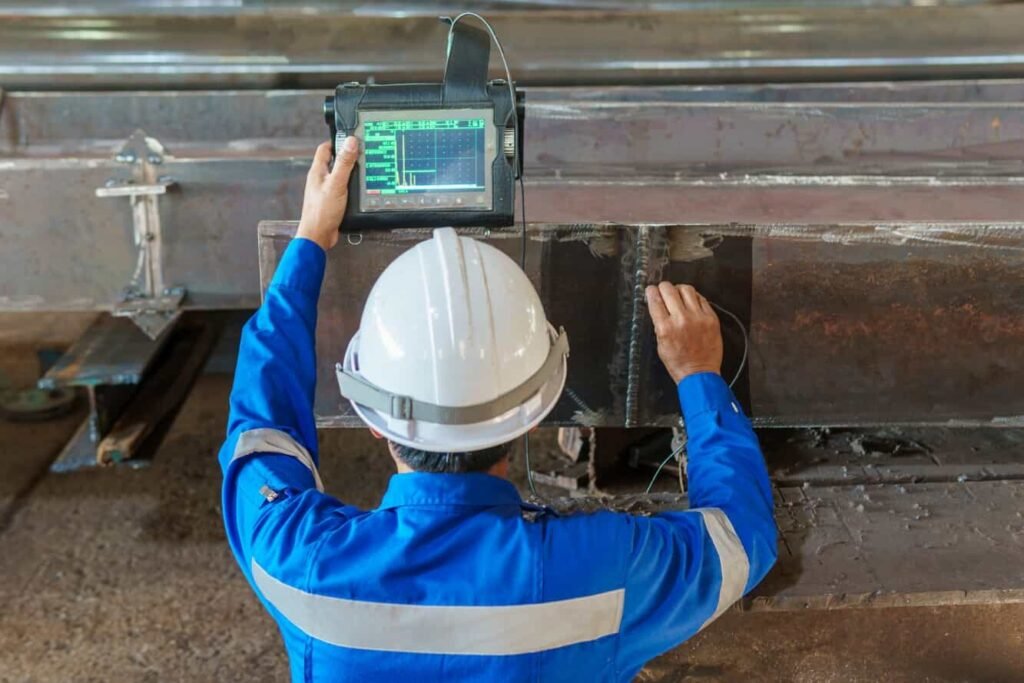
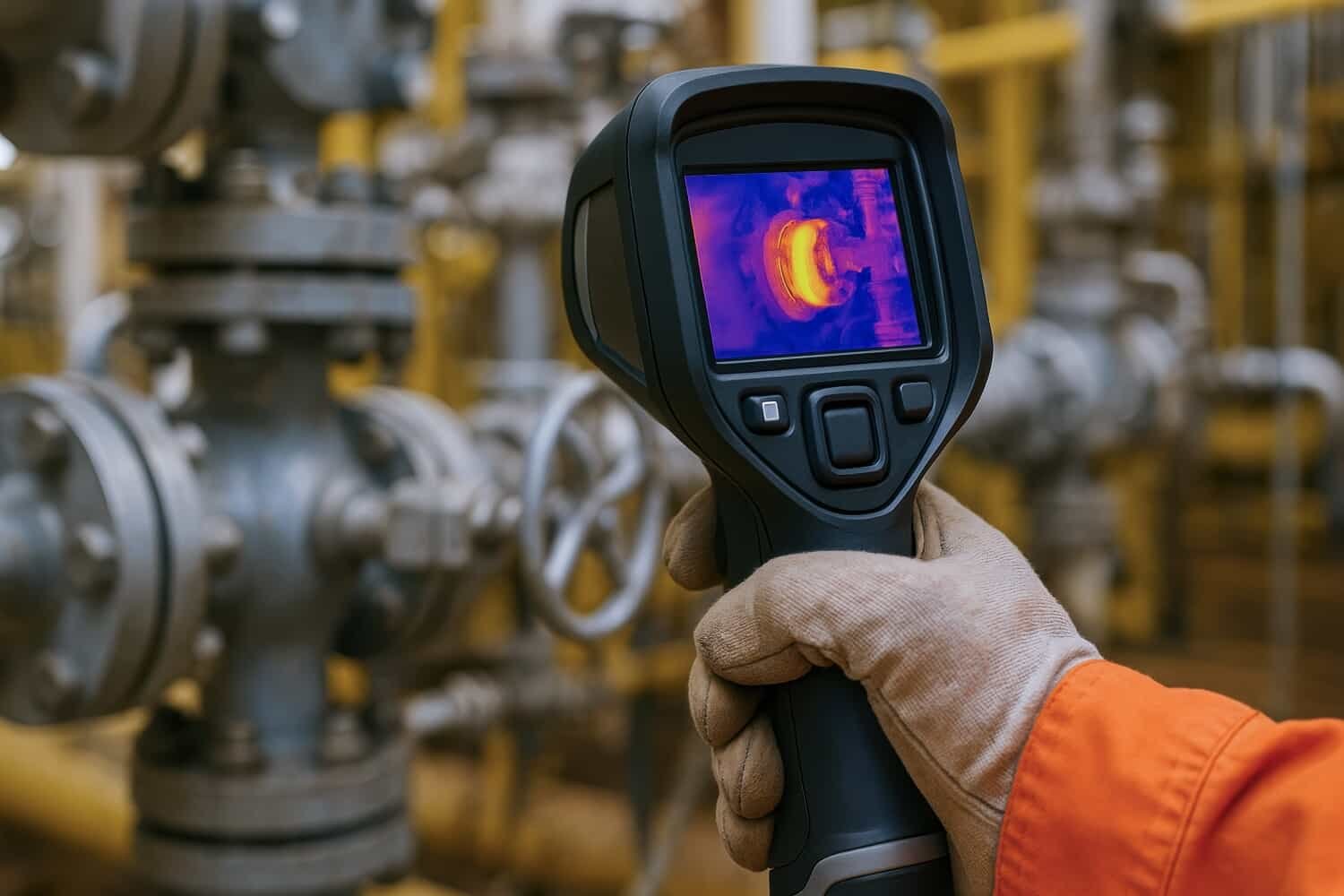
We rely on clear vision to do our best work, whether that means inspecting tight, hard-to-reach spaces or capturing critical images in the dark. That’s why thermal imaging cameras have become essential tools across industries in 2026. From industrial, mechanical, and electrical applications to building and construction, emergency services, medical, veterinary, surveillance, and oil and gas fields, these devices are transforming how we see and solve problems. Even outdoor enthusiasts and hunters are discovering their value beyond the job site.
Kleinschmidt Surveying is an expert in precision tools, and we want to share what we’ve learned about the top thermal imaging cameras. Our mission is to help professionals make informed, confident decisions when selecting the right equipment for their work.
Through hands-on testing and real-world evaluation, we’ve identified the best thermal imaging cameras of 2026 — models that stand out for performance, durability, and usability across professional environments.
Who Is This Guide For?
We have written this guide for a wide range of potential users, from tradespeople to outdoor enthusiasts. Thermal imaging cameras have numerous uses and can benefit individuals and companies. Primary users of thermal imaging cameras may include the following:
Electricians
Electricians can use thermal imaging cameras to help them detect heat-related problems that the human eye cannot see. They can detect high-voltage dangers without having to touch the area, thereby avoiding the risk of harm. They are a visual tool that produces images that an electrician can show to home or building owners.
HVAC Professionals
Thermal imaging cameras help heating, ventilation, and air conditioning (HVAC) professionals accurately detect areas within insulation that require repair, air leaks in ducts, and equipment problems. They can use them as a preventive and preparatory tool for changing seasons, helping homeowners save money.
Home Inspectors
Home inspectors can’t always see moisture leaks in walls, ceilings, or basements. A thermal imaging camera helps homeowners detect problems that need fixing, saving them money and reducing stress. It can also detect unwanted pests and HVAC issues, helping homeowners determine when to call a professional.
Maintenance Engineers
Working with electrical systems can be dangerous. Thermal imaging cameras enable professionals to diagnose and troubleshoot issues without contact. They can detect hot spots, rebalance circuits, and identify abnormal temperatures in motors, gears, pumps, and other areas.
Security Professionals
Security professionals, such as law enforcement, may need to track and pursue potential criminals at night. Without a thermal imaging camera, the criminals may be able to hide or escape the officers. With the camera, the security professionals can scan areas and detect heat sources that project human or animal-like figures. The cameras also make it safer for officers to search hidden areas.
Hunters and Outdoor Adventurers
Some hunting can be done at night, such as for coyotes, hogs, foxes, and raccoons. Thermal imaging helps hunters detect and track animals in the dark, protecting them from accidental encounters with wild animals at night. Outdoor enthusiasts, such as hikers, can use thermal imaging cameras to help them stay on a trail after dark, protect themselves from animals, and locate companions when separated.
Do-It-Yourself Enthusiasts
Many people prefer to do DIY home renovations and repairs. Or they enjoy tinkering with kitchen and bathroom upgrades and other small projects. Some may want to make their home smarter using new technology. Using a thermal imaging camera can help them see in small spaces, detect minor issues, and know when to call for help if they discover major problems in the process.
First Responders or Firefighters
Emergency medical teams can use thermal imaging cameras to locate individuals in need of assistance, thereby increasing the time available to save lives. Because thermal imaging cameras operate even in heavy smoke, firefighters can locate potential victims in need of rescue.
Search and Rescue Teams
Search and rescue (SAR) teams often search for people involved in significant disasters, and locating an injured person must be done quickly. Searches can continue at night with the help of thermal imaging cameras, which can detect people and animals in the dark. They can also assist during daylight hours when searching through debris, such as fallen trees, buildings, and water.
Some secondary users of thermal imaging cameras may include pest control technicians, plumbers, surveyors, wildlife managers, robotic engineers, police, and emergency medical teams.
How We Tested and Rated These Thermal Cameras
Our team employs hands-on testing methods, including field testing under full sunlight, cloudy conditions, nighttime activities, and other challenging environments. We test for accuracy, resolution, durability, and ease of use. Additionally, we value the feedback we receive from clients through our customer support channels. The insights they provide enhance our reviews and support the knowledge we have already gained through over 20 years of experience in precision measurement.

Factors to Consider When Choosing a Thermal Imaging Camera
When selecting a critical tool like a thermal imaging camera, consider its intended purpose and the projects that require it most. Then, you can better determine which model will help you reach your goal. The most common factors include the following:
- Resolution and image quality
- Temperature range
- Sensitivity
- Refresh rate
- Speed
- Battery life
- Ruggedness and durability
- Software integration
- User reporting
- Ergonomics and usability
- Brand support
- Calibration options
Other considerations may depend on your budget, the frequency of use, and whether you are using the camera for personal or professional purposes.
Top 5 Thermal Imaging Cameras of 2026
Below is our list of the five best thermal imaging cameras of 2026, compiled from our comprehensive research and field testing. We break down each model’s best uses, advantages, disadvantages, and specifications — and explain why we recommend it based on real-world performance. Our goal is to share what we’ve learned through hands-on experience, highlight the best FLIR thermal cameras, and provide a clear comparison between Fluke and FLIR thermal cameras to help professionals make confident, informed choices.
1. FLIR E96 Advanced Thermal Imaging Camera
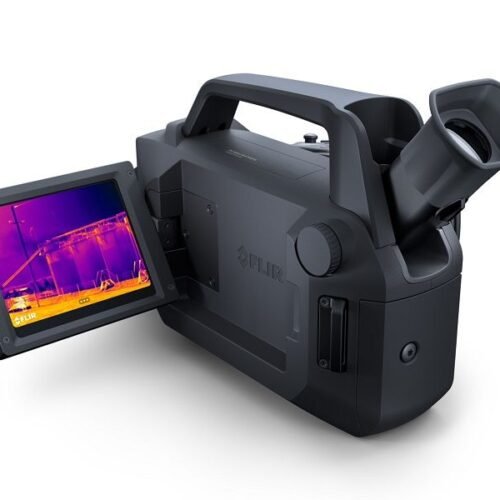
The FLIR E96 is a digital camera that uses an SD card. It is a pisto-grip model that has a built-in photo and video lamp, a 4-inch touchscreen, and continuous zoom. It features laser-assisted autofocus, interchangeable lenses, a built-in microphone, and GPS tagging capabilities. It also has scratch-resistant glass.
Best for:
The FLIR E96 advanced is ideal for professionals who need thorough building diagnostics, as well as those requiring thermal cameras for HVAC and electrical inspections.
Pros:
The FLIR E96 features high-quality 640 × 480 resolution. It can perform long-range imaging and has intelligent autofocus capabilities.
Cons:
The FLIR E96 is priced higher than other thermal imaging cameras. However, it can also be viewed as a good investment for both your business and personal use.
Specs Snapshot:
Resolution: 640 x 480 pixels
Thermal Sensitivity: <30 mK, 42° at 30°C (86°F)
Range: 42°: 42° × 32°
Battery: Rechargeable lithium-ion battery
Why it made the list: The FLIR E96 offers high performance for demanding professional uses.
To learn more about the FLIR E96 advanced thermal imaging camera, including cost, or to purchase one, click on the link to Kleinschmidt Surveying.
2. Fluke Ti480 PRO Thermal Imaging Camera
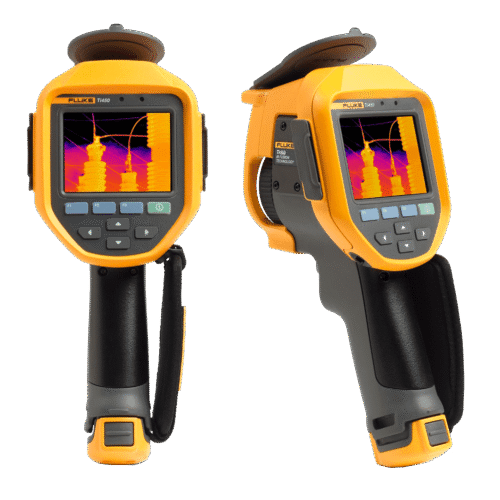
The Fluke Ti480 thermal imaging camera features sharp on-screen images, interchangeable smart lenses, and online connectivity for testing tools, enabling report creation. It is designed for rugged use and is dust- and water-resistant. It is held like a pistol, making it easy to handle and maneuver.
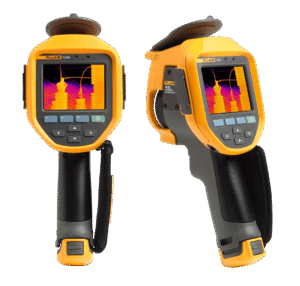
Best for:
The Fluke Ti480 is an excellent choice for industrial maintenance teams and electricians.
Pros:
The Fluke Ti480 offers super resolution. It is ergonomically designed and will withstand rugged conditions.
Cons:
The Fluke Ti480’s software may feel somewhat outdated compared to other thermal imaging cameras.
Specs Snapshot:
Resolution: 640 x 480 pixels
Thermal Sensitivity: ≤0.05 °C at 30 °C target temp (50 mK)
Range: 34 °H x 24 °V
Battery: Lithium-ion smart batteries
Why it made the list: The Fluke Ti480 offers an excellent balance of power, portability, and clarity, making it a top choice for travelers who may face varying job requirements.
The Fluke Ti480 thermal imaging camera can be purchased at Kleinschmidt Surveying and shipped directly to your home or office.
3. FLIR T865 Thermal Imaging Camera
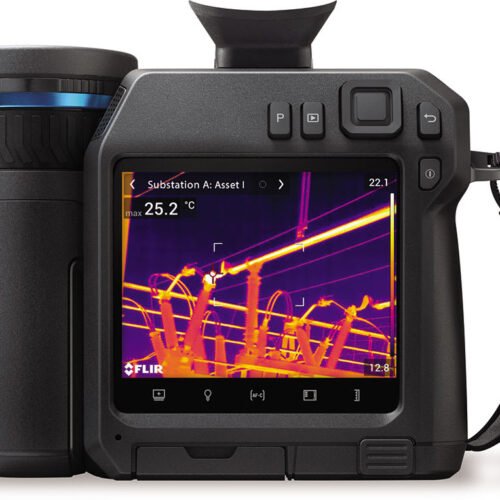
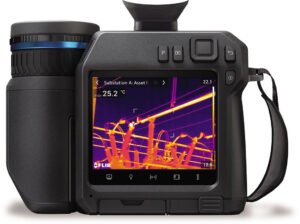
The FLIR T865 is a high-performance infrared camera with a lens. It offers high temperature and visual accuracy. It is compatible with several other software packages and has a removable SD card. Its optical block can rotate 180 degrees, making it easier to view hard-to-reach areas. This camera also allows you to connect via Wi-Fi and Bluetooth.
Best for:
The FLIR T865 is a high-precision instrument that enables professionals to perform non-contact inspections. Mechanical, electrical, and manufacturing professionals may find this camera particularly suitable.
Pros:
Radiometric video and laser-assisted autofocus are the two most significant advantages of the FLIR T865.
Cons:
Due to its advanced capabilities, it may be more expensive than other cameras. This product may seem like overkill for basic users.
Specs Snapshot:
Resolution: 640 × 480 pixels
Thermal Sensitivity: <30 mK at 30°C (42° lens)
Range: 80° × 63°
Battery: Rechargeable lithium-ion battery
Why it made the list: The FLIR T865 has professional-grade optics. It also has the most flexibility for professional users.
Kleinschmidt Surveying offers this product. Click on the link to learn more about the product and the company.
4. FLIR T540 Professional Thermal Camera
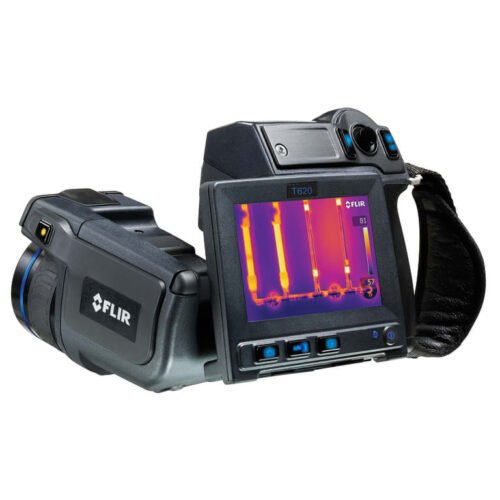
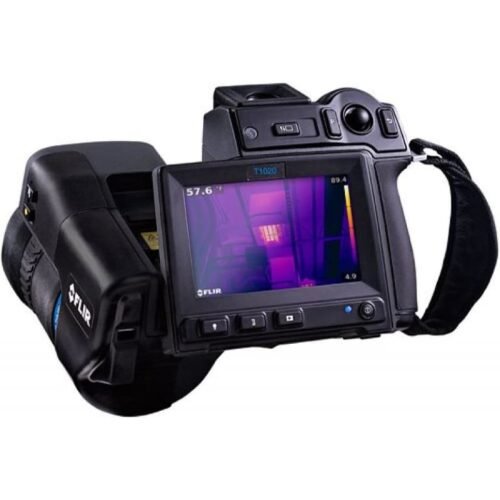
The FLIR T540 features a 4-inch touchscreen, a removable SD card slot, and dual battery compartments. It is an infrared camera with a lens for professionals in the electrical, mechanical, and industrial industries, for diagnosing or troubleshooting problems. This camera also features an optical block that rotates 180 degrees and laser-assisted focus, allowing you to see into narrow and small spaces.
Best suited for:
Those performing utility inspections who require advanced diagnostics may prefer the FLIR T540.
Pros:
The FLIR T540 offers several advantages, including a 180° rotating lens block and sharp thermal resolution.
Cons:
This thermal imaging camera has a larger form factor, making it less portable than other cameras. It is also more noticeable.
Spec Snapshot:
Resolution: 464 × 348 pixels
Thermal Sensitivity: <30 mK, 42° @ 30°C (86°F)
Range: 42° × 32° 24° × 18° 14° × 10° 80° × 63°
Battery: Rechargeable lithium-ion battery
Why it made the list: The FLIR T540 is ideal for those who need flexibility and clarity.
To discover more features of the FLIR T540 professional imaging camera, follow the link to the Kleinschmidt Surveying product page.
5. FLIR E76 Advanced Thermal Camera
The FLIR E76 is more advanced than the E54 and offers laser-assisted autofocus. Images can be enhanced with MSX technology, a patented technology. It uses a removable SD card, but pictures can also be uploaded to the cloud. It can auto-calibrate interchangeable lenses, features laser-assisted focus, and is equipped with a magnesium alloy chassis for rugged wear.
Best for:
Building inspectors and HVAC professionals tend to prefer the FLIR E76.
Pros:
This thermal imaging camera has interchangeable lenses and customizable presets.
Cons:
The FLIR E76 has a mid-range battery life, requiring more frequent charging or replacement compared to other batteries.
Specs Snapshot:
Resolution: 320 × 240 pixels
Thermal Sensitivity: <30 mK, 42° at 30°C (86°F)
Range: FLIR E76 42°: 42° × 32°
Battery: Rechargeable lithium-ion battery
Why it made the list: The FLIR E76 is recognized as the most reliable and adaptable device for multiple workflows.
You can order this product or look at and compare similar thermal imaging products at Kleinschmidt Surveying.
Thermal Imaging Camera Comparison Table
|
Model |
Resolution |
Best Use |
Key Feature |
Price Range |
|
FLIR E96 |
640 x 480 |
Electrical Inspections |
Long-range thermal |
$$$$ |
|
Fluke Ti480 Pro |
640 x 480 |
Industrial |
Super Resolution |
$$$ |
|
FLIR T865 |
640 x 480 |
Precision Analysis |
Laser-assisted Focus |
$$$$ |
|
FLIR T540 |
464 x 348 |
Utility/Diagnostic |
Rotating Lens |
$$$ |
|
FLIR E76 |
320 x 240 |
HVAC / Building |
Interchangeable lenses |
$$ |
Advantages and Disadvantages of Using Thermal Imaging Cameras
Like any product, thermal imaging cameras have advantages and disadvantages when used for professional and personal purposes.
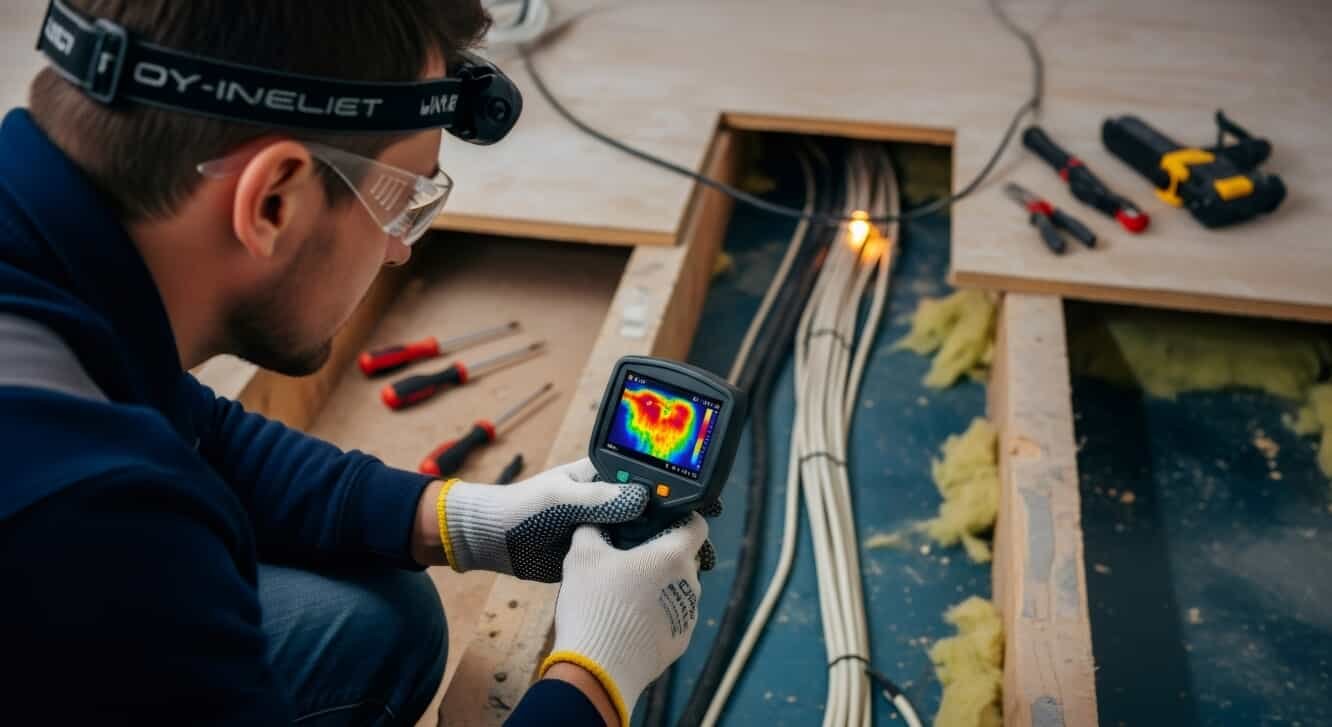
Advantages may include the following:
- Non-contact diagnostics
- Improve safety for workers and individuals
- Increase the efficiency of diagnosing and fixing problems
- Useful day and night
- Perform in all kinds of weather conditions
- Long-term cost-savings
- Easy location of people or animals after dark
Additional advantages include detecting hidden issues such as moisture, heat loss, and overloads. They can also detect water leaks, structural damage, and electrical hazards from a distance, making them an excellent tool for preventing more significant issues.
Disadvantages may include the following:
- High upfront cost
- Learning curve for advanced features
- Varying accuracy by brand or model
- May need to buy interchangeable lenses
- May need to purchase software or upgrades
- May be blocked by structural barriers
- Lower resolution than regular cameras
- Limited battery life
Extreme weather conditions can affect the accuracy of images, lighting, and sources. They may produce false readings in heavy snow, fog, or downpours, or when water builds up on the lens.
Final Recommendations
To summarize our findings, we have created the list below based on our comprehensive testing and client feedback.
Best Overall: Fluke Ti480 Pro
Best for Professionals: FLIR T865
Best Budget Power: FLIR E76 Advanced
Best Versatility: FLIR T540 Pro
Best for Building Inspections: FLIR E96 Advanced
To shop, request a demonstration, or discuss which camera is best for your needs, please contact us today.
Frequently Asked Questions
Which thermal camera has the highest resolution?
Cameras with 640 x 480 resolution can produce the best images. Cameras include the FLIR E96, the Fluke Ti480, and the FLIR T865.
Can thermal imaging work in daylight?
Yes. Thermal imaging cameras detect heat, not light, so they work well in daylight, especially when objects are hidden behind trees, bushes, or other obstructions.
What is the price range for professional-grade thermal imaging cameras?
The best professional-grade thermal imaging cameras can range from $8,000 to over $40,000. You may see some products that cost a few thousand dollars, but they are basic and cannot perform the duties a professional needs. The price varies based on factors such as functionality, the number and type of lenses required, battery life, and software compatibility.
How often do thermal imaging cameras need to be calibrated?
Annual calibration is often recommended for professional thermal imaging cameras. However, this may change depending on factors such as frequency of use, weather conditions, handling, and the required precision.
Ready to Upgrade Your Inspections?
Whether you are a homeowner looking to tackle DIY projects or a professional working in high-risk situations, there is a thermal imaging camera that can enhance your performance. Select from a range of models to enhance your job safety and efficiency. We have spent a lot of time researching and experimenting with the best thermal imaging cameras of 2026 to make your decision easier. Discover our comprehensive range of thermal imaging solutions, backed by genuine expertise and dedicated professional support.
Shop the top thermal imaging cameras for professionals. We can also offer you a demonstration of the thermal imaging cameras we recommend, and one of our experts will be happy to answer any other questions you may have. We are here to ensure you get the right camera for your needs.