Sure, you can use feeler gauges, optics, calipers, straight edges, or dial indicators for industrial machinery shaft alignment. But why rely on such rudimentary tools when time and precision are critical? Industrial production requires the accuracy of a laser shaft alignment tool to help ensure on-point calibration.
The Kleinschmidt Surveying team has partnered with industrial professionals for more than 25 years, providing the technical expertise you require to improve machinery performance and reduce downtime.
What Is a Laser Shaft Alignment Tool?
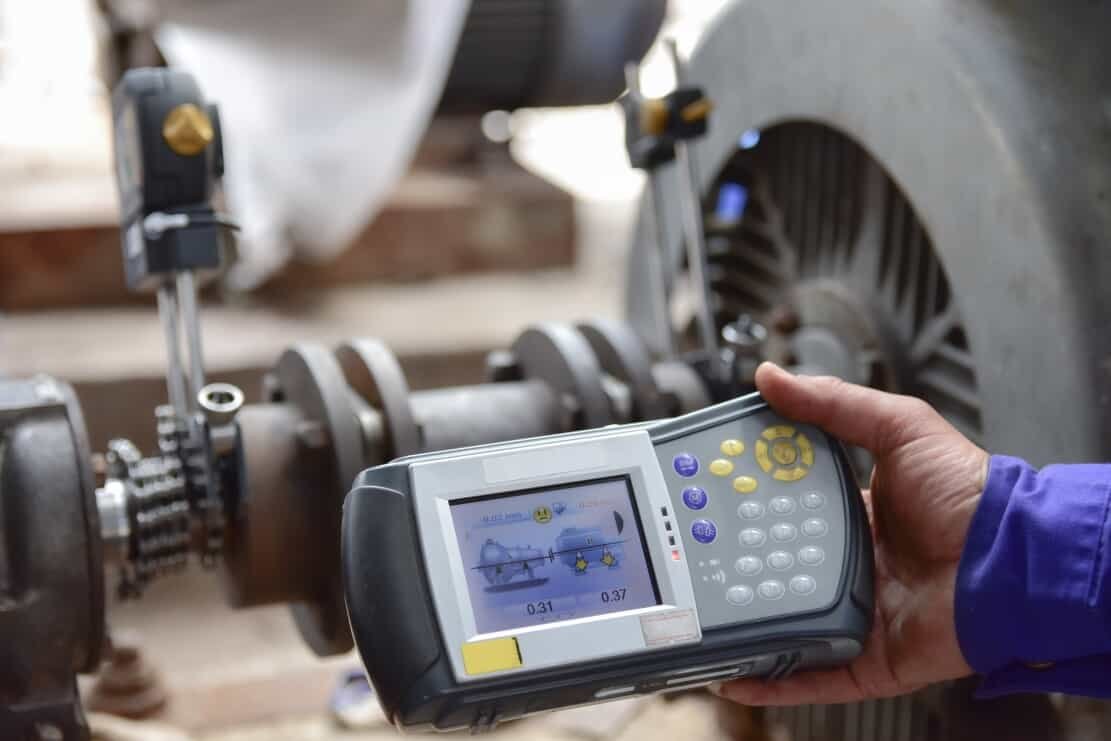
A laser shaft alignment tool precisely aligns the rotating axes of coupling machinery components such as motors, gearboxes, and pumps, achieving accuracy within hundredths of a millimeter.
How Does a Laser Shaft Alignment Tool Work?
Employing laser transmitters and receivers, the instrument gauges angular and offset misalignments. Industrial shaft alignment tools deliver immediate, precise, and consistent readings, surpassing their predecessors’ capabilities.
Why Shaft Alignment Matters in 2026
To minimize energy usage, maximize machine uptime, and prolong the life of vital assets such as motors and pumps, laser shaft alignment will be essential in 2026. Laser tools reduce maintenance costs and downtime by eliminating almost half of machine faults caused by misalignment, thanks to their unparalleled, real-time, micron-level precision.
Factors to Consider When Selecting a Laser Shaft Alignment Tool
It’s important to carefully consider your operational needs before selecting a laser shaft alignment system. Some factors include:
- Software
- Accuracy
- Measurement versatility
- Durability
- Reporting
- Battery life
- Cost
Top 5 Laser Shaft Alignment Tools (2026 Edition)
We’ve compiled our recommendations for the top five laser shaft alignment tools of 2026 to help you make an informed decision for your specific applications.
1. Fluke 831 – Laser Shaft Alignment Tool
The Fluke 831 Laser Shaft Alignment Tool provides a robust, efficient system that accurately and quickly aligns vertical and horizontal centerpoints, reducing operational interruptions. It offers a guided, straightforward interface, cloud-enabled reporting through ARC 4.0, and “Adaptive Alignment” features suitable for intricate, non-standard, or sizable equipment.
Industries that employ heavy, rotating machinery, such as high-speed pumps and turbines, conveyor systems, and compressors, appreciate Fluke 831’s capabilities.
Key Specifications
- Processor: Exynos 9810, 2.7 GHz, 1.7 GHz octa-core
- Memory: 4 GB RAM, 64 GB flash memory
- Display: 8-inch TFT with integrated light sensor
- Resolution: 1920 x 1200 pixels
- Connectivity:
- Wi-Fi: 802.11 a/b/g/n/ac/ax 2.4 G+5 GHz
- Bluetooth 5.0
- NFC (RFID)
- Cameras:
- Main: 13.0 MP with autofocus
- Front: 5.0 MP
- Environmental Protection: IP68 (dustproof, submersible up to 1.5 meters)
- Operating Temperature Range: -20 to 50°C (-4 to 122°F)
- Battery:
- Type: Li-ion rechargeable 3.8 V/5050 mAh/19.2 Wh
- Operating Time: Up to 11 hours
- Dimensions: Approximately 256 x 149 x 35 mm (10.08 x 5.87 x 1.38 inches)
- Weight: Approximately 710 grams (1.6 lbs)
Advantages
Exceptional Accuracy and Efficiency: The Fluke 831 uses features such as extend mode for gross misalignment and a Thermal Growth Calculator for dynamic machine changes.
Rapid Deployment and User-Friendly Design: Its rapid setup and tablet-like interface allow users to align coupled shafts in four easy steps, surpassing conventional methods.
Remote Data Management via Cloud: Wi-Fi connectivity enables data transfer to ARC 4.0 PC software for storage, sharing, evaluation, and trending. Cloud transfer keeps maintenance teams informed of potential production-interrupting issues.
Challenges and Constraints
Increased Upfront Cost: The sophisticated features and functionalities might be more expensive than basic alignment tools, which could be a factor for operations with budget constraints.
Complicated Basic Tasks: For basic alignment requirements, the numerous features may be excessive, potentially complicating the process for users who only need fundamental tools.
Training Commitment: Advanced functionality requires additional training for effective use, which could be a factor for teams with varying skill levels.
All Things Considered
The Fluke 831 Laser Shaft Alignment Tool provides reliability and accuracy for applications across multiple industries. Its highly accurate, intuitive interface and cloud-enabled data sharing features make it an important tool for achieving precise machinery alignment. Nonetheless, the high upfront cost and advanced capabilities should be considered when choosing this tool.
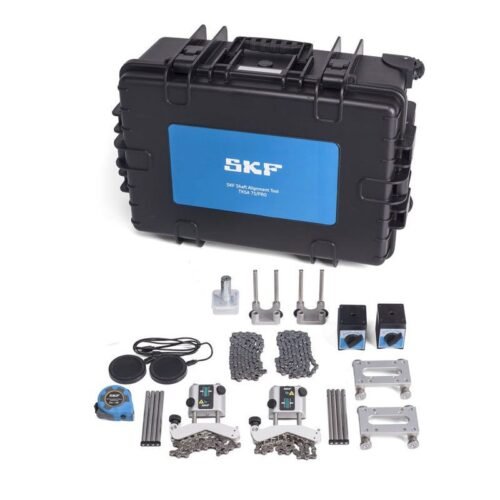
2. SKF TKSA 71/PRO– Professional Wireless Laser Shaft Alignment
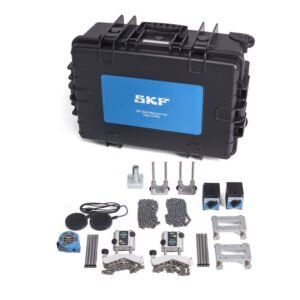
The SKF TKSA 71/Pro is a high-end instrument that’s well-suited for harsh environments and extremely narrow spaces, in particular. It features dedicated software applications that enable accurate alignment of spacer shafts, horizontal and vertical shafts, and machine trains.
While an asset across a range of industries, the SKF TKSA 71/PRO is particularly well matched when aligning heavy-duty pumps, compressors, and turbines in the oil and gas field. It helps prevent bearing failure in manufacturing and production plants and adeptly handles alignment tasks on mining and mineral processing conveyors and crushers.
Key Specifications
- Processor: It requires an external mobile device (minimum iOS 9 or Android 4.4.2+) or the official TKSA DISPLAY2, relying on an external mobile device to store data and generate and save reports.
- Measurement Distance: 0.04 to 10 m (0.13 to 32.8 ft).
- Accuracy: <1% ±
- Sensor Tech: 20 mm 2nd gen PSD with red line laser (Class 2) and electronic inclinometers (+/-0.1).
- Shaft Diameter: 20 to 150 mm (0.8 to 5.9 in), up to 450 mm (17.7 in) with extension chains.
- Alignment Methods: 3-position (9-12-3), Free measurement (min. 40° rotation), Automatic, Soft Foot, Machine Trains.
- Battery/Wireless: ~8 hours operation, wireless charging pads, Bluetooth 4.0 LE.
- Protection Rating: IP67 (sensors and rugged trolley case).
Advantages
High Efficiency and Flexibility: The SKF TKS A 71/PRO provides automatic measurement, disturbance correction, and a 3D machine visualization for precise, swift alignment. Appropriate for horizontal/vertical shafts, spacer shafts, and machinery trains. It requires a complete rotation.
Enhanced Features: It includes automated foot-check measurements and adjustable target parameters.
Easy-to-Use, Durable Design: The SKF TKS A71/Pro operates through intuitive smartphone and tablet apps, incorporating guided, automated, and 3D-interactive visual processes. It includes IP67-rated sensors and a robust case for dependable performance in challenging industrial settings.
Challenges and Constraints
Considerable Investment: The system’s initial cost is approximately 20% higher than entry-level models such as the TKSA 41/51, which could make it challenging for smaller operations to purchase.
Complex Set-up and Operation: The TKSA 71 PRO requires advanced training for industry professionals. While user-friendly after the initial learning curve, this laser shaft alignment tool requires precise mounting and skill to overcome initial misalignment limitations.
Sensitive Instrumentation: The device is IP67-rated, meaning it is dust-tight and remains functional after 30 minutes of submersion in up to 1 meter of water. However, care is needed while handling.
All Things Considered
The SKF TKSA 71/PRO–Professional Wireless Laser Shaft Alignment’s high price point positions it as out of reach for smaller operations. Additionally, its technical complexity makes it impractical for inexperienced users. However, it is a versatile, high-end instrument that maintains long-term accuracy in harsh and challenging environments. That said, it requires careful handling indicative of a sensitive electronic device.
3. Prüftechnik OptAlign Touch – Laser Shaft Alignment Tool
The Prüftechnik OptAlign Touch is a cutting-edge, touchscreen-based laser shaft alignment tool designed to quickly and precisely align rotating machinery. It uses WiFi/cloud connectivity, proprietary SensALIGN 5 sensors, and single-laser technology to deliver guided alignments in real time.
A practical option within multiple industries, including manufacturing, oil and gas, utility, marine, and mining, the automated Prüftechnik OptAlign Touch minimizes downtime and improves maintenance efficiency.
Key Specifications
- Processor: 1.0 GHz quad core with 2 GB RAM and 32 GB of SD-card storage.
- Sensor Type: sensALIGN® 5, 5-axis (2 planes, 4 displacement axes + angle).
- Accuracy: >98%.
- Measurement Resolution: 0.04 mil.
- Display: 7-inch, 800 x 480 px, projective capacitive multi-touchscreen.
- Operation Time: 12 hours (typical use).
- Connectivity: Integrated Bluetooth 4.1, Wi-Fi IEEE 802.11 b/g/n, and USB.
- Protection: IP65 (dustproof/water-jet resistant) and shockproof.
- Features: Single-laser technology (no pre-alignment), 3D animation, and cloud-based data transfer.
- Capabilities: Horizontal/vertical alignment, machine train (up to 6 machines), soft foot, and cardan shaft alignment.
Advantages
Outstanding Precision and Speed: The touchscreen-based technology delivers rapid, highly precise measurements within 0.001 mm resolution.
Cloud Connectivity and Reporting: Employing both Bluetooth and Wi-Fi connectivity, the Prüftechnik OptAlign Touch delivers automated real-time reporting.
Accessible and Versatile: Users of all skill levels can easily access Prüftechnik OptAlign Touch’s touchscreen interface guide. Its sensALIGN7 upgraded sensors allow for expanded capabilities.
Challenges and Constraints
Setup Issues: The Prüftechnik OptAlign Touch delivers precise laser/sensor head alignment, requiring careful bracket and mount setup.
Environmental Sensitivity: Although this laser shaft alignment tool uses filtering technologies, vibrations in industrial settings may contribute to fluctuations in measurement accuracy.
Advanced Training: Effectively mastering the tablet-based system features and interpreting the reports requires training and experience.
All Things Considered
Regarded as a top-tier investment, the Prüftechnik OptAlign Touch – Laser Shaft Alignment Tool provides an accurate, reliable maintenance solution that reduces energy costs while enhancing machine runtime. That said, the initial investment could prove challenging for a start-up company, and mastering its idiosyncrasies requires time and patience. However, the benefits of its precise, real-time cloud-based data collection and reporting can’t be overstated.
4. FixturLaser NXA Pro – Shaft Alignment System
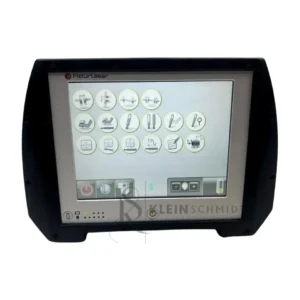
FixturLaser NXA Pro‘s highly precise alignment of horizontal/vertical machinery makes it an ideal choice for heavy industrial manufacturing, maintenance, and energy sectors. For example, it rapidly and accurately aligns wind turbine gearboxes and generators, as well as other heavy rotating power generation equipment.
Key Specifications
- Wireless Communication: Class II Bluetooth transmitter with multi-drop capability.
- Detector/Sensor: 2nd generation Ultra HD 30mm CCD.
- Accuracy: 0.3%
- Measurement Method: 6-Axis MEMS Gyroscope, allowing for vertical shaft alignment.
- Display: 6.5″ color TFT-LCD touchscreen.
- Communication: Bluetooth Class II.
- Range: Up to 10 meters (33 ft) between sensor units.
- Operating Time: 10 hours continuous (50% backlight).
- Environmental Protection: IP65-rated (dust-tight and water-jet protected).
- Shaft Diameter Capacity: 25-175 mm (1″-6.9″) with standard chains; up to 450 mm (18″) with extensions.
- Weight (Kit): 7.7 kg (17 lbs).
Advantages
Advanced Sensor Technology: The MEMS gyroscopes built into the sensors provide advanced horizontal and vertical alignment capabilities with 360-degree rotation.
Verti-Zontal Compound Move®: Typically, one set of adjustments is all that’s required to align vertical and horizontal points simultaneously.
OmniView™ Feature: The system’s gyroscope detects the user’s and machine’s positions, rotating the screen to match the user’s viewpoint.
Challenges and Constraints
High Initial Investment: The significant upfront cost of the professional-grade NXA Pro may be too much of a financial commitment for many budget-conscious operations.
Complicated Process: The complicated setup may not be optimal for users tasked with basic alignment adjustments.
Advanced Training: While the FixturLaser NXA Pro is ultimately user-friendly, it does require additional training to master its advanced features.
All Things Considered
Valuable for its complex alignments and reduction in machine downtime, the FixturLaser NXA Pro utilizes cutting-edge sensor technology to ensure precise machinery alignment. However, it’s worth noting that careful consideration should be given to specific applications to offset the initial investment and user learning curve.
5. SKF TKSA 41 – Wireless Laser Shaft Alignment System
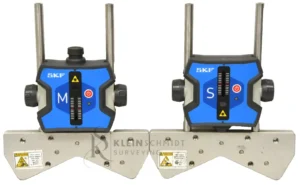
As an advanced laser shaft alignment tool, the SKF TKS 41’s large detectors, two highly precise wireless measurement units, and a 5.6″ touchscreen display streamline tasks in challenging conditions.
Used across a wide range of industries, the SKF TKSA 41 is particularly effective in general maintenance, wind power, automotive, and mining applications.
Key Specifications
- Measurement Distance: 0.07 to 5 meters
- Detector Type: 29 mm charged-coupled detectors (CCD)
- Inclinometer Accuracy: ±0.5°
- Communication: Bluetooth 4.0 LE
- Operating Time: Up to 8 hours
- Display Unit: 5.6-inch color resistive touchscreen LCD
- IP Rating: IP54-protected against dust ingress and splash proof
- Operating Temperature: 0 to 45°C
Advantages
Affordability: This is a mid-range, cost-effective solution to improve machine accuracy and productivity.
User-Friendly: Users with minimal experience will appreciate SKF TKSA 41’s intuitive alignment process. Its display unit guides provide step-by-step instructions.
Wireless Flexibility: In areas where cable management is difficult or space maneuverability is challenging, the wireless design offers easy access.
Challenges and Constraints
Software Limitations: The TKSA 41 features an older, dedicated touchscreen display unit rather than more advanced tablet-based apps.
Limited Specializations: Optimized for horizontal rotating machinery as opposed to specialized alignment requirements.
Cost considerations: Although a more affordable laser alignment tool, it still requires a significant financial investment.
All Things Considered
An efficient, reliable overall maintenance tool, the TKSA 41 provides greater accuracy than manual alignment options. It is generally straightforward after initial training. However, its limited horizontal alignment capability may not meet operational needs.
An experienced member of the Kleinschmidt Surveying team can assist you with determining which laser shaft alignment system best meets your company’s unique needs.
Advantages of Laser Shaft Alignment Tools
Compared to conventional methods, laser shaft alignment instruments offer enhanced precision (up to 0.001 mm), much shorter setup and measurement times, and greater dependability. They provide digital reporting, decreasing human error and machine downtime. Ultimately, this boosts output and improves energy efficiency.
Why Choose Kleinschmidt Surveying in 2026?
Recognized by Techninsights Customer Satisfaction Survey as one of the “10 Best Suppliers,” Kleinschmidt Surveying focuses on excellence, reliability, and customer satisfaction. We offer high-quality measurement solutions, and our professionals bring decades of experience to the table.
Whether you need initial guidance and recommendations for laser shaft alignment tools or technical support for existing equipment, one of our reliable experts will help you find a solution. Reach out to us by completing the online form.